
001. PROOF OF LIFE: On Home, Displacement, & Continuity
What does it mean to defend home in a world increasingly shaped by fire, force, and displacement?

Editor’s Note
Proof of Life is a short film I made in collaboration with one of my close friends and long-time collaborators, Simrah Farrukh. It emerged in response to bearing witness—again and again—to patterns of forced displacement across the world.
This essay accompanies the film. While my earlier writing on domicide examined the legal and structural dimensions of home’s destruction, this piece turns inward—toward the moments that made those frameworks personal, and the questions that followed.
I recommend watching the film after this essay. They are meant to speak to one another.
Yesterday marked one year since the fires tore through Los Angeles.
The anniversary landed heavily. Amid the latent end-of-year recaps and resolutions, my feed filled instead with memories—friends and community members marking the day they lost their homes.
I remember that week clearly.
On New Year’s Day, I had just returned from a cousin’s wedding in India, carrying what I can only describe as the worst sickness I’ve experienced in recent memory. I’d come straight from northern India, where the AQI hovered above 500—that sort of air that begins to make your lungs burn. Whatever it was—flu, exhaustion, environmental fallout—I arrived in Los Angeles and was immediately bedridden as the winds picked up across the city.
If you’re from Southern California, you know that fire season is familiar. Like most, I didn’t initially register the reports as extraordinary.
Until January 7, 2025.
Evacuations were ordered. Friends near the fire zones came to stay with us, shaken. Then the fires multiplied: Altadena had burned. The Pacific Palisades burned.
What I remember most isn’t just the destruction, but the atmosphere—a depressive malaise that seemed to settle over the city, tactile and collective. Loss at that scale arrives too quickly to process.
What lingered wasn’t just grief, but a quiet recalibration—of what could vanish, how fast, and how little ceremony loss is afforded once it becomes widespread.
Los Angeles became the frontline of this particular climate catastrophe. And while devastation is devastating anywhere, part of the shock—both locally and globally—came from the mythology surrounding this city.
LA is often imagined as an enclave of wealth, aspiration, and insulation. To live here is to know that is an incomplete image. This city is a sprawling web of neighborhoods that embody contradictions, stitched together by people across every walk of life.
Still, for many, the fires marked a first encounter with loss at that scale.
Around that time, a tweet by John Mayer circulated widely. It read:
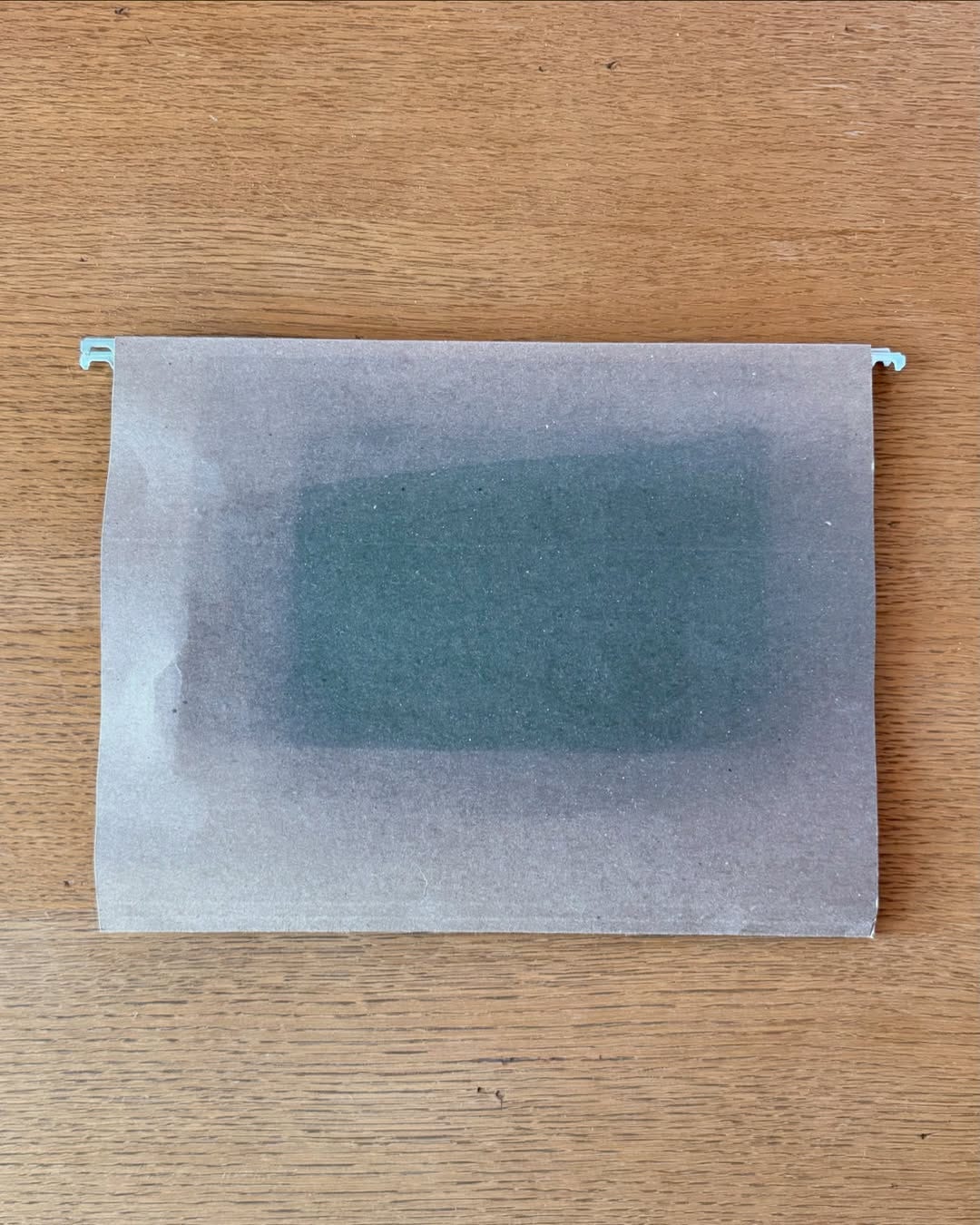
“This is the most valuable thing I own. It’s a folder of photos of my father, spanning his life from being a baby, an educator, a husband and a father. It’s the only evidence of his life that will exist over time. These are the ‘documents’ you read about people taking from their homes. When you hear someone say they’ve lost everything in a fire, this is much of that everything, if not all of it. Those who say they’ll be okay still have their folders and their albums. Those who are inconsolable have lost them.
Just behind the immeasurable loss of life is the loss of the proof of life.”
The phrase stayed with me: proof of life. Not just survival, but evidence. Memory. Continuity.
On Proof of Life
As someone working in the realm of climate action, the reality of a world shaped by increasingly erratic weather patterns is not abstract—it is a given. And yet, I resisted, and struggled, to respond immediately. I needed time to find language that could respond rather than react.
The fires did not occur in isolation. They arrived after a year of bearing witness to the genocide in Gaza. In November 2024, Donald Trump returned to power, and Project 2025—a roadmap for the rapid consolidation of executive authority—moved swiftly from theory into practice, rolling back decades of social and environmental protections.
Then came the fires. And after the fires, the ICE raids.
Armored federal agents stormed homes across Los Angeles’ working-class immigrant neighborhoods in unmarked vans, separating families without warning or due process. And this violence has not receded with time. Even now—on the one-year anniversary of the fires—ICE violence has again turned lethal.
Throughout it all, I found myself increasingly becoming a student of history—not as escape, but as orientation. Studying parallel struggles. Tracing patterns across time and geography. Trying to understand how institutional power repeats itself, and how, beneath it, a quieter collective consciousness persists—one that insists on alternative futures.
Here we were: a city emerging from ashes, thousands displaced, as Trump ordered the National Guard to descend against those fighting for the sanctity of home, for the safety of immigrants. In Gaza, an ongoing assault on land, life, and dignity. Across the world, climate catastrophe rendering entire regions increasingly uninhabitable—from fires in California, to smog choking cities in India, to rising seas swallowing island nations.
And with that came the realization: we are witnessing a global war on the sanctity of home—and many of us are no longer simply observers of it.
We are inside it.
On Domicide
Finding language mattered. That search led me to the legal framework of domicide—a term used to describe the deliberate destruction of home. Not collateral damage, but strategy. Homes erased by war, by raids, by climate neglect.
The concept surfaced for me in 2023, in the months following October 7, when international legal attention turned toward Gaza. South Africa brought a case before the International Court of Justice, accusing Israel of violating the Genocide Convention.
But as lawyers argued over intent, Palestinians watched their homes, hospitals, universities, places of worship, farmland, and graveyards disappear. Alongside debates over legal definitions of genocide, the framework of domicide—less litigated, but no less urgent—began to clarify something essential.
In the same period, the International Court of Justice received another historic request—this time from a coalition of Pacific Island nations seeking clarity on whether states have legal obligations to address climate change, and whether failing to do so violates the rights of present and future generations.
Though catalyzed years earlier by students and youth organizers, the request arrived just months apart from South Africa’s genocide application. On the surface, the cases addressed different crises. Taken together, they revealed a deeper throughline.
Both confront the same outcome:
The loss of home. The loss of proof of life.
We live in a world increasingly shaped by displacement—by flood, by fire, by force. Naming that loss as domicide reframes it not as inevitability, but as intent.
And intent demands accountability.
What Comes Next
In the months that followed, I found myself asking a quieter question than before.
Not only: How do we stop this?
But: What does it look like to live in defiance of it?
If domicide names the violence of erasure, then the counter-practice, I’ve come to believe, is devotion to place—however fragile, however contested. To memory. To rooting, even when permanence is no longer guaranteed.
I began paying closer attention to the ways people hold onto land when it is threatened. How culture survives not only through resistance, but through care. Through making. Through tending what remains. Through staying with—long after attention has moved on.
This is the terrain that shaped Proof of Life. And it is the terrain that keeps leading me to studying continuity: how communities remember place.
How staying—when possible—and returning—when not—can both be acts of defiance.
This next chapter, The Artisan Archive, emerged from this reckoning. Not as a departure from climate justice, but as an extension of it. An inquiry into how rooted knowledge—of land, of material, of making—offers a counterweight to a world increasingly structured around displacement.
If climate justice is to mean anything, it must be a fight not only for survival, but for the right to remain. To rebuild. To root. To refuse the quiet normalization of loss.
This Substack begins there—with home not as abstraction, but as something lived, tended, defended. And with the belief that proof of life is not only what we save in emergencies, but what we choose to carry forward.
💗
Aditi, I love how you are always able to connect different topics all at once. I find it incredible to read your experience going from one form of pollution in India to another in L.A, showing our whole world is facing tremendous climate challenges.
Thank you for your words🙏🏻They are an important reminder of the interconnectdness of our world.